// Works
Works
What I’m building now, the talks I’ve given, and the projects along the way. Ventures go on this list once they’ve been released.
Ventures
Business ventures: real solutions for people with real problems. I’m pretty new at this, but I’m giving it my best to create something truly great that people want.
Ultimate Kami — Fitness and nutrition tracking
2026 · On the App Store

An iOS app that tracks the calories in what you eat against your weight-loss targets, and your progress in the gym. Versions with a built-in AI coach, and with an MCP server so AI assistants can log and read your data, are in development.
Visit Ultimate Kami · The story behind it
Projects
Mostly software projects I’ve been working on since about the mid-2000s. I became a software fiend fairly late in the game, but very quickly fell in love with low-level performance programming, especially programming graphics and sound, due to my background as an electronic music producer.
Namagen — Programmable music environment
2022–present · Working pre-alpha
A standalone application for composing and performing generative music. Namagen combines sequencing, synthesis, sampling, and a custom programming language to let compositions evolve during playback.
More about Namagen · namagen.music
Fitness — Training, diet and sleep
2019–present · Training, diet and sleep
I started taking my fitness seriously at around the end of 2019, but it wasn’t until recently that I really got everything dialled in: my diet, my training technique and regimen, sleep, and so on. A big part of this has been building Ultimate Kami.
Piano — Learning to play
2025–present · Learning
I’ve spent the last year learning the piano.
Permanent Machine Architecture — Stable computing platform
August 2026 · Architecture proposal
An exploration of a whole-computer architecture designed to preserve software compatibility across changing hardware. The proposal covers processing, graphics, storage, networking, and device interfaces, with an emulator-first approach to development.
The work includes an initial architecture specification and a proposed path from software emulation to hardware implementations.
Voice-First Operating Environment — Conversational computing
August 2026 · Prototype specifications
A design for using voice and text to operate applications, manage files, and carry out development tasks across desktop and mobile.
I explored both a desktop control layer and an Android-based system capable of creating, building, installing, and modifying applications through conversation. The work produced prototype specifications covering interaction, system integration, and recovery.
Voice-First Personal Software — Apps created through conversation
August 2026 · Product and technical specification
A web-based platform concept that lets users describe an application, generate it, and refine it through conversation.
The design includes persistent data, version history, rollback, and sharing. Initial prototype scenarios focus on small personal tools, including a counter and workout tracker.
Fitness Tracking and AI Integration
October 2026 · In development
A nutrition and exercise tracking application, developed from an existing spreadsheet workflow into an iOS app.
The next stage centres on a shared server-backed data model and an MCP interface, allowing AI assistants to log meals, update workouts, and retrieve progress alongside a conventional app interface.
Agent-Friendly Applications and Commerce
October 2026 · Concept development
An exploration of services that users can access through their preferred AI assistant. Applications provide structured data and actions, while the assistant handles conversational interaction.
Use cases include personal tracking tools and a commerce platform through which agents can discover products and interact with participating merchants.
Residential Design Visualisation
October 2026 · Planning
A proposed Unreal Engine walkthrough built from architectural floor plans. The aim is to evaluate room proportions, circulation, and practical design decisions in an interactive environment before construction.
Additional explorations
- Generative music marketplace: sharing, remixing, and distributing programmable compositions, instruments, and assets.
- Interactive music games: smaller products combining musical systems with gameplay.
- Development and studio infrastructure: cross-platform coding workflows, remote development, audio routing, and networked studio design.
Talks
I haven’t given many yet, and most of them have been opportunities through my work here in Japan. I hope to give more online and share them here, although preparing for a compelling talk takes a lot of time, and I’m not a natural public speaker.
try! Swift Tokyo 2025 — Rendering beautiful text using MSDFs and Metal
2025 · Tokyo · Conference talk
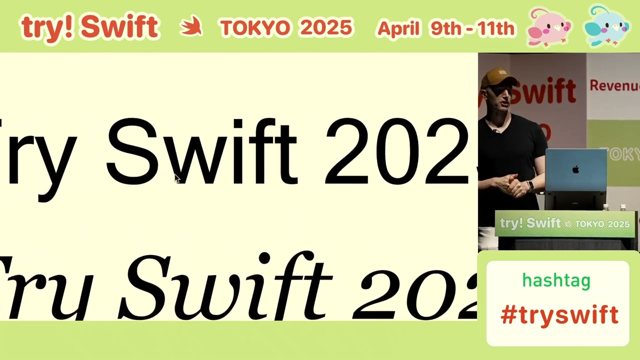
A fast, real-time, infinite canvas user interface built with Metal, and how multi-channel signed distance fields (MSDFs) keep its text crisp at any scale.
try! Swift Tokyo 2019 — Graphics like Pixar using Swift
2019 · Tokyo · Conference talk
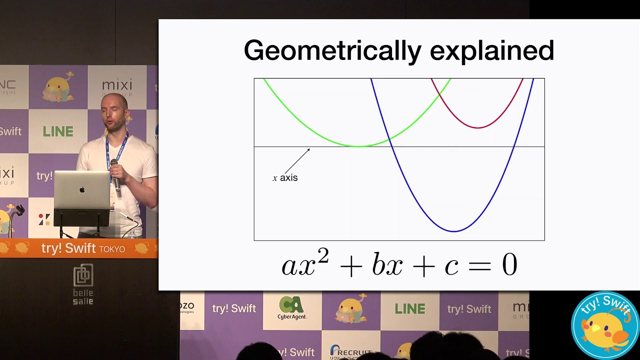
Building a basic ray tracer from scratch in Swift. Ray tracing is the cornerstone of Pixar’s RenderMan, the rendering technology that dominates the animated film industry.
Photography
Mostly urban landscape imagery with beautiful lighting. Many of these pictures are from when I was living in Japan in 2007–2008.

Music
From the late 90s to the 2010s, I was obsessively active in electronic music, creating my own music, releasing it, and performing it.
3/4 club music — Experimental production
c. 2010–2012 · Music production
Extremely experimental jungle, techno and dubstep in 3/4 time — an attempt to make a non-standard time signature work in a club. An interesting learning experience, though it didn’t go anywhere. Before this I briefly tried UK funky, but left once I realised I was copying an established sound rather than adding to it.
Strictly 138 — Dubstep production and promotion
c. 2006–2009 · Wellington, New Zealand
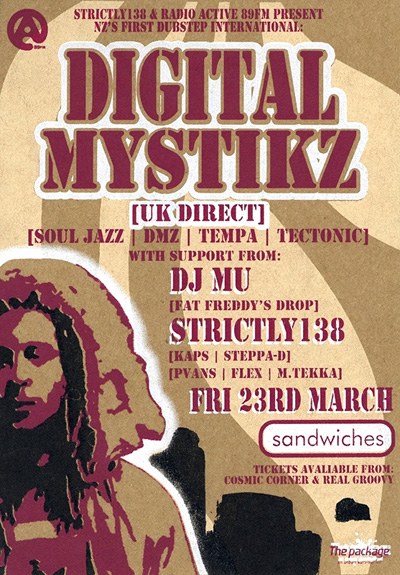
Produced dubstep and was a founding member of the Strictly 138 collective. I promoted and organised many local and international gigs, including Skream in Auckland, Digital Mystikz’ Mala in Wellington (New Zealand’s first international dubstep show, in 2007), Loefah, Coki and Kode9.
Soundtrack album — A film without pictures
c. 2005–2006 · Unreleased
A highly experimental album: essentially the soundtrack to a film that didn’t exist. It was too ambitious, and I eventually gave up on it.
Hit Sound — Production studio
c. 2000–2004 · Christchurch, New Zealand
Ran a production studio and produced a number of CDs for Christchurch and New Zealand artists.
More about drum and bass in Christchurch
Kapsy — Drum and bass
c. 2000–2004 · Music production
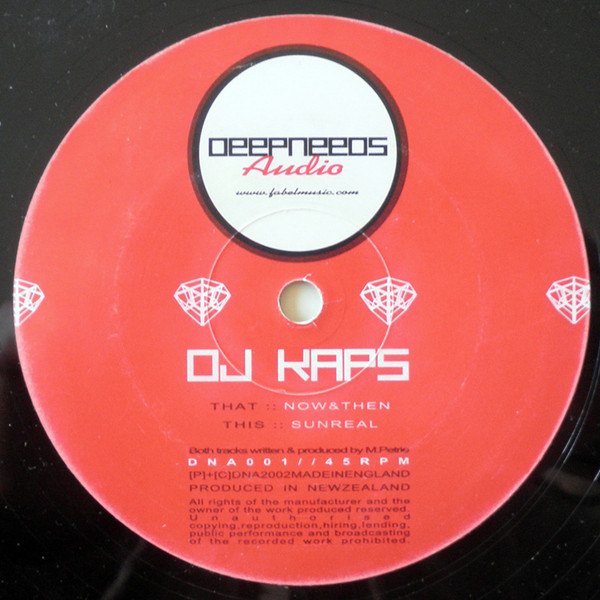
Made drum and bass under the name Kapsy.
More about drum and bass in Christchurch
Earlier projects
Bits and pieces that don’t fit anywhere else.
Generative music prototype — Precursor to Namagen
c. 2019–2021 · iOS app prototype
Another implementation of what would become Variations and then Namagen, reusing my earlier synthesizer components. It added a lower-level component that let user programs define generative music algorithms in real time, and became a small iOS app — but making music with it still relied on manual tooling and fragile pipelines, so I set it aside.
RT 01 — From-scratch path tracer
2019 · Personal project

A stochastic path tracer written from scratch, using an axis-aligned bounding box BSP tree for acceleration. SIMD ray tracing only paid off for the first bounce, so later bounces switched to scalar tracing, which turned out faster. Its showcase is a one-million-polygon animation of a Mercedes-Benz 300 SL Gullwing.
More about RT 01 · Watch the render
ZOZO — Body measurement technology
2018 · Tokyo
Computer vision and body measurement work at the fashion e-commerce company ZOZO. I was new to the field, but my low-level, performance-first approach let me contribute a lot, and I built cross-platform frameworks so measurement algorithms and 3D result rendering could be reused across platforms.
From-scratch programming — Learning projects in rural Japan
c. 2016–2018 · Personal projects
After moving to the Japanese countryside, I worked on many personal projects, mostly for learning. This is when I discovered Handmade Hero and started programming everything from scratch.
Audio prototypes — Reverb and synthesis components
c. 2016–2018 · Personal projects
A series of test audio apps that later evolved into Variations and Namagen, along with a feedback delay network reverb and synthesizer components that, with many modifications, eventually made their way into Namagen.
Japanese — All Japanese, all the time
c. 2010–2016 · Language study
Intensive study using the AJATT method. By the end I had an Anki deck of more than 10,000 cards and thousands of hours of podcasts behind me, and could understand most Japanese, including films and dramas. Then I moved to Japan.
Harmon — First music apps
c. 2012–2014 · Android apps
Where I really started developing apps: a number of small music apps, beginning with Harmon, an Android take on Brian Eno’s Bloom.
QuakeWorld server — Net Access
c. 1996–1998 · Online gaming
Ran a QuakeWorld server for the ISP Net Access. Around the same time, I attended the informal LAN parties at Christchurch Polytechnic.
